
OST – Ostschweizer Fachhochschule als neues IngCH-Mitglied
OST – Ostschweizer Fachhochschule als neues IngCH-Mitglied
Neues Jahr, neue Partnerschaft: Wir freuen uns sehr, die OST – Ostschweizer Fachhochschule als neue Partnerin von IngCH begrüssen zu dürfen.
Die Wirkung von IngCH entsteht durch die enge Zusammenarbeit mit engagierten Partnerinnen und Partnern. Als neue Partnerin unterstützt die OST unsere Projekte und erweitert unser Netzwerk. Wir freuen uns auf die Zusammenarbeit.
Über die OST – Ostschweizer Fachhochschule
Die OST ist eine dynamische und innovative Hochschule, die mit zukunftsweisenden Impulsen die Ostschweiz stärkt und zur wirtschaftlichen und gesellschaftlichen Entwicklung der Region beiträgt. Sie ist die Fachhochschule der sechs Ostschweizer Kantone sowie des Fürstentums Liechtenstein.
Mit rund 3’800 Studierenden, 1’500 Weiterbildungsteilnehmenden und über 1’000 laufenden Forschungsprojekten in sechs Departementen ist die OST ein zentrales Bildungs- und Innovationsdrehkreuz der Region.


Happy holidays and thank you!
Happy holidays and thank you!
A heartfelt thank you to everyone who accompanies and supports us. Your commitment, your trust and our joint efforts make our work possible. Together, we are strengthening STEM education in the long term and making a difference.
We wish you happy holidays, a restful break and a happy new year in 2026!
We look forward to working with you in the new year!
Our office will be closed from 22 December 2025 to 3 January 2026. We will be happy to assist you again from 5 January 2026.
Warm regards, the IngCH team
Lea Hasler ignites the spark for STEM
Lea Hasler ignites the spark for STEM
Our managing director Lea Hasler is committed to promoting young talent across all channels. In the latest Schulblatt portrait, she explains how we use IngCH to inspire young people of career-choosing age to pursue STEM careers – and what she, as a young mother, wishes for the next generation.
Eine Reportage aus dem Schulzimmer
Leuchtende Kinderaugen mit «Robertas» und LEGO Education
*Dr. Nora A. Escherle, Projektleiterin «RobertaPlus»
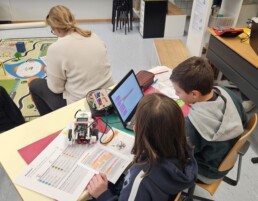
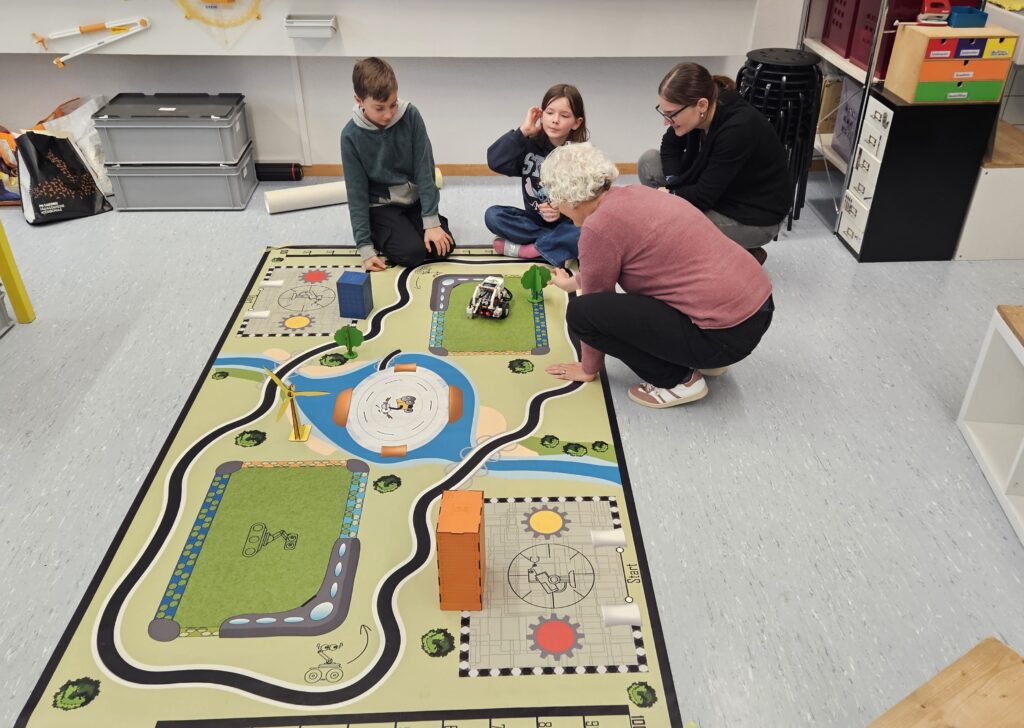
Es begann am frühen Morgen eines sehr dunklen, sehr nassgrauen Novembertags – ein ereignis- und abwechslungsreicher Tag für Primarschüler:innen der Primarschule Sempach, die gemeinsam mit Andrea Maria Schmid und Anja Lanz der PH Luzern in die Welt der Robotik eintauchen durften.
Im Ramen des Projekts «RobertaPlus», das IngCH MINT for our future gemeinsam mit der PH Luzern leitet, werden seit 2025 zahlreiche Robotiktage an Primarschulen durchgeführt.
Ich durfte an einem dieser Tage dabei sein und konnte die Workshopleiterinnen, die Lehrperson und vor allem die Kinder während der vielen «robotervollen» Stunden beobachten und begleiten. Was ich erleben durfte, könnte in keinem grösseren Kontrast zum unfreundlichen Novemberwetter ausserhalb des Schulhauses stehen.
- spannende, kurzweilige Inputs zum Thema Robotik seitens der Workshopleiterinnen, die mit viel Fachwissen und Verve durch den Tag führten
- kundige, engagierte Begleitung durch die Lehrperson
- Neugierde, ansteckende Freude und konzentrierte Teamarbeit seitens der Primarschulkinder
«Robertas» programmieren
Es war eine Freude zu beobachten, mit wie viel spielerischer und kreativer Begeisterung Kinder der Robotik begegnen. Von morgens um 8 Uhr bis nachmittags um 16 Uhr widmeten sie sich dem Thema. Nach einer kurzen Einführung durften sie sich mit einer Aktivität mit Bee-Bots auf niederschwellige Weise dem Thema annähern. Danach ging es weiter mit LEGO Education MINDSTORMS Ev3-Robotern (im Workshop liebevoll «Robertas» genannt), die sie anhand von blockbasierter Programmiersprache programmieren konnten.
Es war ein langer Tag für die Kinder, doch sie bleiben bis zuletzt eifrig bei der Sache. So vieles musste ausprobiert, getestet, abgeändert und wieder neu ausprobiert werden. Es wurde viel gekichert und gelacht – und die Augen leuchteten. Als die Workshopleiterinnen zum Schluss fragten, wer nochmals solch einen Workshop machen wolle, gingen blitzschnell alle Hände nach oben. Eine schönere Bestätigung kann es nicht geben. Es zeigt: Robotik ist ein Thema, das Kinder begeistern kann.
Weiterbildung mit RobertaPlus
Das RobertaPlus-Projekt von IngCH und der PH Luzern ist 2025 gestartet und dauert bis 2029. Ausgehend von Kantonen der Innerschweiz wird das Angebot schrittweise auf weitere Kantone der Deutschschweiz ausgeweitet. Grosszügig gefördert wird es durch die Ernst Göhner Stiftung, die Bärbel&Paul Geissbühler Stiftung und die Dätwyler-Stiftung.
Neben Robotiktagen an Volksschulen beinhaltet das Projekt weitere Elemente: Angebote für Lehrpersonen, die sich im Bereich Educational Robotics weiterbilden möchten («Roberta-Schulungen»), sowie den Austausch von Hochschulpersonal und Lehrpersonen mit Wirtschaftspartner:innen verschiedener Regionen der Schweiz – mit dem Ziel, Lernumgebungen mit authentischen, aktuellen Einsatzgebieten und regionalen Bezügen anzureichern.
*Dr. Nora A. Escherle ist Projektleiterin von «RobertaPlus» und hat die Schüler:innen im Workshop im November vor Ort begleitet

Meitli-Technik-Tage im Herbst 2025
Im November 2025 fanden unsere Meitli-Technik-Tage an vier Standorten statt. CSCS, Medtronic, ABB und Nestlé öffneten ihre Türen und gewährten interessierten Mädchen Einblicke in ihre Arbeitswelten und stellten verschiedene technische und naturwissenschaftliche Berufsfelder vor. Ziel dieser Tage ist es, jungen Frauen frühzeitig den Zugang zu MINT-Berufen zu öffnen.
Die Teilnehmerinnen blickten hinter die Kulissen eines Hochleistungsrechenzentrums, programmierten erste eigene Anwendungen, erlebten, wie Medtech-Innovationen Leben verbessern, und bauten selbst einfache Schaltkreise und Steuerungen. In Workshops zu Robotik, Informatik und Engineering konnten sie experimentieren und ihre technischen Fähigkeiten stärken.
Die Meitli-Technik-Tage zeigen: Begeisterung für MINT entsteht dort, wo junge Frauen Technik erleben, ausprobieren und direkten Kontakt zu Expert:innen haben. Damit leisten wir einen wichtigen Beitrag zur Nachwuchsförderung und zur Gleichstellung im technischen Berufsfeld in der Schweiz.
Mehr Informationen zu den Meitli-Technik-Tagen
Lea Hasler spricht bei STEM Voices über MINT-Förderung
Lea Hasler goes STEM Voices
Im Video von Little Scientists zeigt unsere Geschäftsführerin Lea Hasler, wie wir Kinder und Jugendliche seit 40 Jahren für MINT begeistern. Sie erklärt, warum MINT wichtig ist – und sagt es klar: „Kinder brauchen MINT, um zu erleben, wie kreativ Technik und Wissenschaft sind.“
Mehr Informationen zu unserer MINT-Arbeit gibt es im Video.
Our 2025 annual report is online
Our 2025 annual report is online
Sometimes strength lies not in change, but in consistency. The 2024/2025 financial year was marked by stability. The annual report showcases our projects and activities promoting STEM careers throughout Switzerland. Our mission remains clear: to inspire young people to take an interest in mathematics, information technology, natural sciences and technology.
To the 2025 Annual Report.
Unser Jahresbericht 2025 ist online
Unser Jahresbericht 2025 ist online
Manchmal liegt die Stärke nicht im Umbruch, sondern in der Beständigkeit. Das Geschäftsjahr 2024/2025 stand im Zeichen von Stabilität. Der Jahresbericht zeigt unsere Projekte und Aktivitäten, mit denen wir MINT-Berufe in der ganzen Schweiz gefördert haben. Unsere Mission bleibt klar: junge Menschen für Mathematik, Informatik, Naturwissenschaften und Technik begeistern.
Zum Jahresbericht 2025.
General meeting and members' event at Balgrist
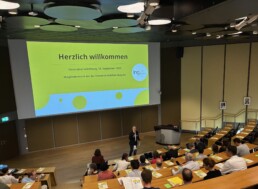
Last Thursday, our general meeting was held at the Balgrist University Hospital, followed by a members' event.
Representatives from 17 member companies, as well as partners and supporting organisations, took the opportunity to gain an insight into the world of modern medicine.
After the official part, we were given exciting insights into Balgrist Campus AG and OR-X – an impressive example of the interplay between research, technology and medicine.
During the aperitif that followed, the focus was on exchanges and discussions on the topic of young talent in STEM.
The date for the next General Meeting has already been set: 24 September 2026, at Levitronix in Zurich.
Unser neuer MINT-Film ist da!
Unser neuer MINT-Film ist da!
Sechs Menschen. Sechs Wege. Eine Leidenschaft: MINT. Unser neuer Film für die Technik- und Informatikwochen ist da! Zu Beginn jeder Technik- und Informatikwoche eröffnen wir am Montag die Projektwochen an Schulen und möchten die Klassen für die kommenden Tage motivieren und begeistern. Unser neue Film zeigt, wie vielfältig Studiengänge und Berufe im MINT-Bereich sind und wie spannend die Geschichten dahinter sein können.
Mit dabei sind:
- Marie-Rosa Fasser, Universitätsklinik Balgrist, Biomechanik
- Roman Wixinger, Ergon Informatik AG
- Reto von Salis, SBB CFF FFS, Bauingenieurwesen
- Marguerite Alice Babusiaux, ETH Zürich, D-MATL, Materialwissenschaften
- Thomas Sauter-Servaes, ZHAW School of Engineering, Verkehrswissenschaften
- Salome Bachmann, ETH Zürich, Departement Erd- und Planetenwissenschaften, ETH Zürich, Erd- und Klimawissenschaften
Ein grosses herzliches Dankeschön an alle Beteiligten für ihre Zeit, ihre Leidenschaft und ihren Beitrag zu diesem Projekt. Ein besonderer Dank geht auch an Pierre de Senarclens und Reto Waser für die Umsetzung.
Wir hoffen, dass der Film Neugier weckt und viele Schüler:innen inspiriert, ihre eigenen Wege im MINT-Bereich zu entdecken.